Welcome back. Today crypto got its clearest set of rules, its biggest acquisition and its weirdest product launch, all in 24 hours. The SEC finally told the industry which tokens are securities (most of them aren't). Mastercard went from signing up 85 crypto partners last week to writing a $1.8 billion check for stablecoin infrastructure today. And Tether, the company behind USDT, announced it can train AI models on your phone. The thread connecting all three: the people building crypto's future aren't asking for permission anymore. They're moving fast enough that the old guard has to keep up or buy its way in.
IN TODAY'S NEWSLETTER
1. The SEC just redrew the crypto map
2. Mastercard just spent $1.8 billion on stablecoins
3. Tether wants AI to run on your phone
REGULATION
The SEC just redrew the crypto map
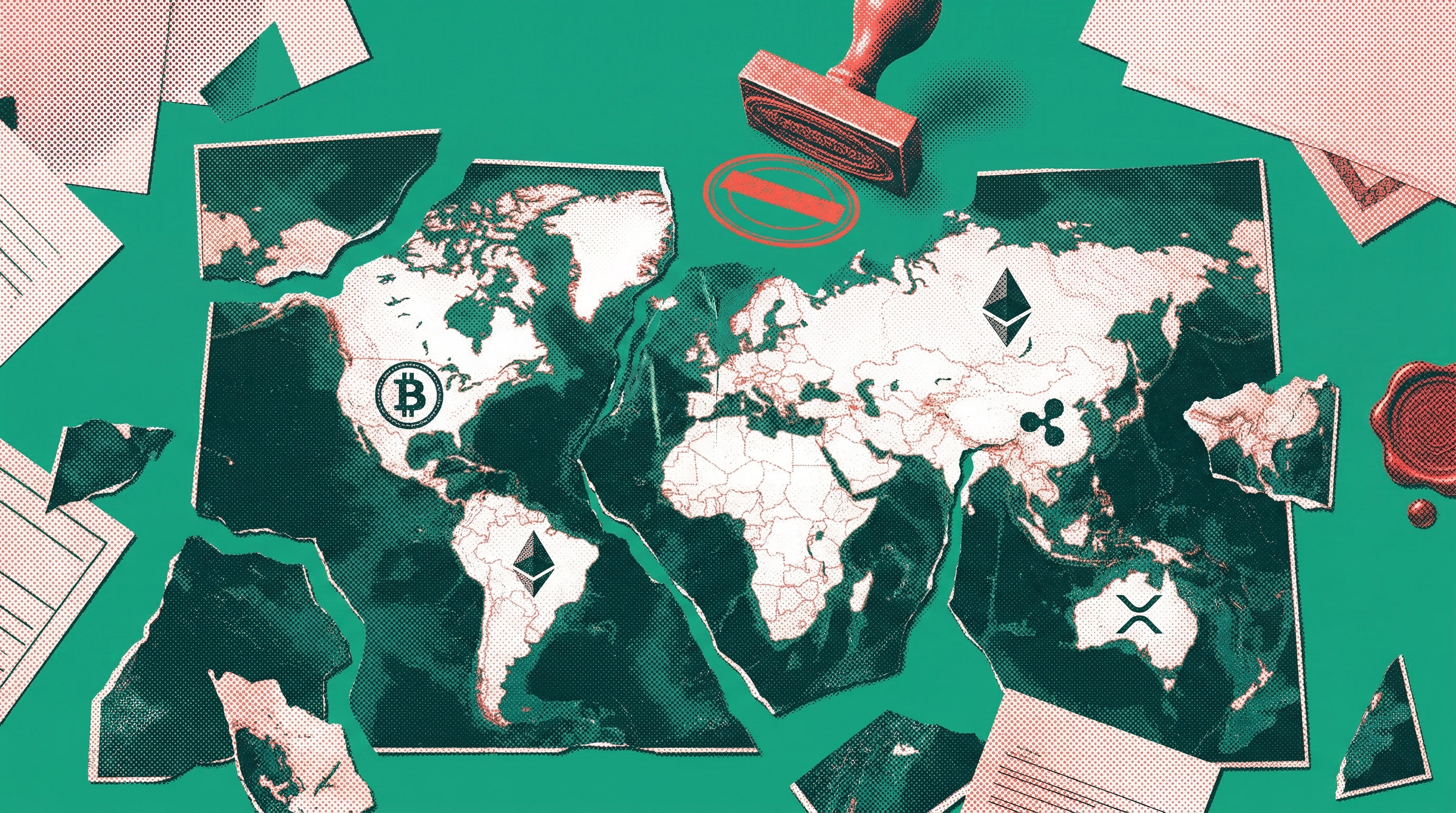
The U.S. government finally told the crypto industry which tokens are securities and which ones aren't. The answer: most of them aren't.
+ The SEC published Release 2026-30 sorting all crypto tokens into five categories: digital commodities, digital collectibles, digital tools, stablecoins and digital securities. Only digital securities fall under SEC rules
+ The CFTC joined the interpretation and will enforce commodity law consistently with it
+ The SEC fact sheet names Bitcoin, Ethereum, XRP and Dogecoin as examples of digital commodities, explicitly not securities
+ Staking, airdrops, mining and wrapping non-security tokens don't automatically trigger securities law
+ The interpretation also says investment contracts can "come to an end," meaning tokens that started as fundraising vehicles can graduate out of securities status as projects decentralize
+ SEC Chair Atkins: "After more than a decade of uncertainty, this interpretation will provide market participants with a clear understanding of how the Commission treats crypto assets. This is what regulatory agencies are supposed to do: draw clear lines in clear terms"
The CLARITY Act would make this taxonomy law, but it stalled in the Senate over anti-money laundering and DeFi fights. Until Congress acts, this guidance can be reversed by a future SEC chair.
This is the single most important piece of crypto regulation since the Gensler-era lawsuits started. Four out of five token categories are officially not securities. Bitcoin, Ethereum, XRP and Dogecoin are named as commodities. Staking and airdrops got a green light. The catch is that it's guidance, not law, and guidance can be undone. Watch whether the CLARITY Act passes the Senate. If it does, this taxonomy becomes permanent. If it doesn't, everything Atkins built is one election away from disappearing.

This is the single most important piece of crypto regulation since the Gensler-era lawsuits started. Four out of five token categories are officially not securities. Bitcoin, Ethereum, XRP and Dogecoin are named as commodities. Staking and airdrops got a green light. The catch is that it's guidance, not law, and guidance can be undone. Watch whether the CLARITY Act passes the Senate. If it does, this taxonomy becomes permanent. If it doesn't, everything Atkins built is one election away from disappearing.
MARKETS
Mastercard just spent $1.8 billion on stablecoins
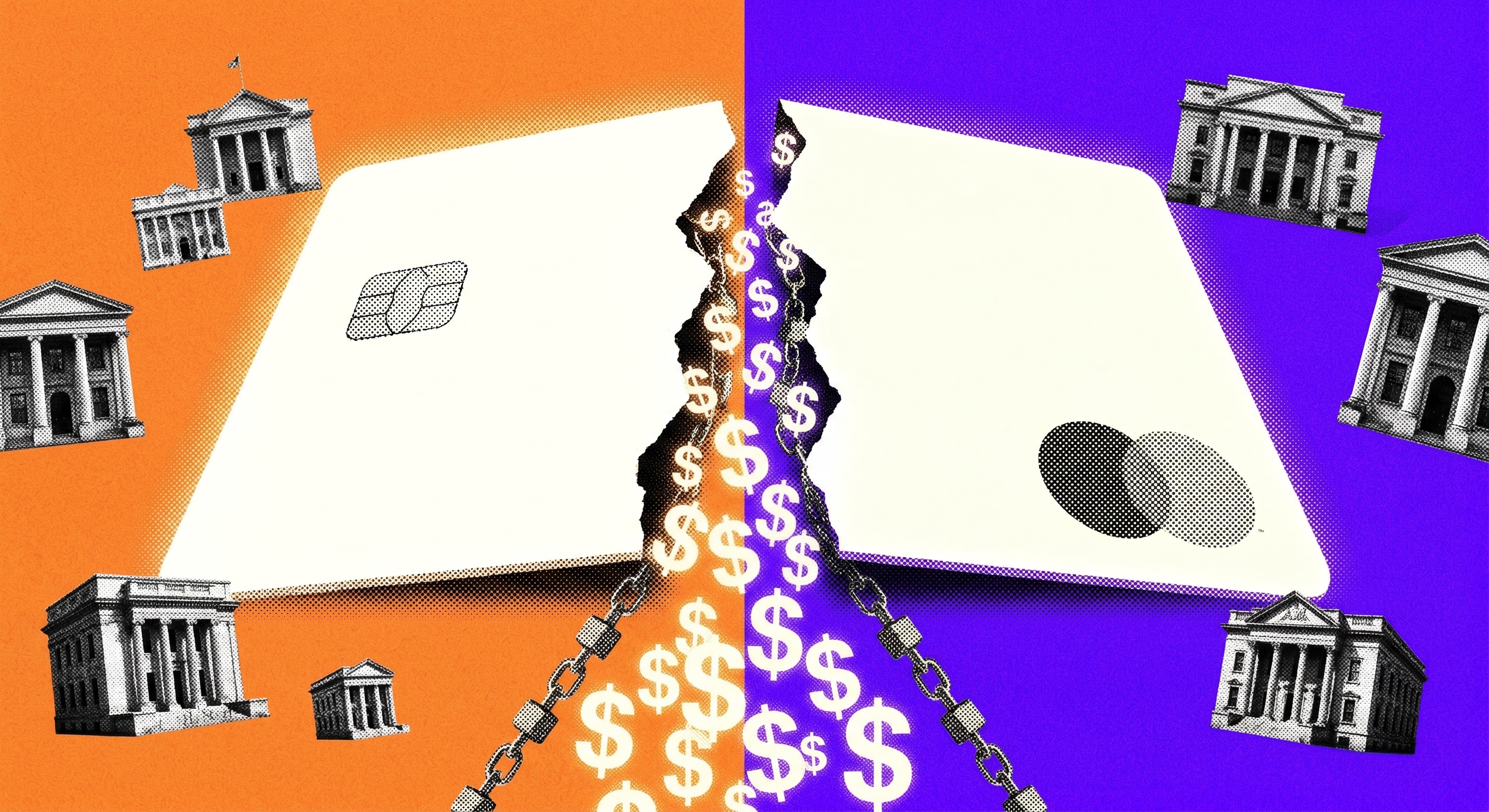
Six days ago, Mastercard announced a partner program with 85 crypto companies. Today it wrote a $1.8 billion check. That escalated fast.
+ Mastercard agreed to acquire BVNK, a London-based stablecoin infrastructure company, for up to $1.8 billion including $300 million in earn-outs
+ BVNK processes $30 billion in annualized stablecoin payments across 2.8 million transactions in 130+ countries for clients like Worldpay, Deel and Flywire
+ It's the largest stablecoin infrastructure deal ever, topping Stripe's $1.1 billion purchase of Bridge in 2024
+ BVNK was already powering Visa Direct's stablecoin pilot, meaning Visa now relies on infrastructure its biggest competitor owns
+ Mastercard's European crypto lead Christian Rau told investors stablecoins "can serve as an essential settlement mechanism" but "do not replace the traditional services" the company offers
Stripe bought Bridge. PayPal expanded PYUSD to 70 countries. Visa runs USDC on Solana. Now Mastercard drops $1.8 billion. The card networks aren't experimenting with crypto anymore. They're buying the toll roads.
This is the moment stablecoins stopped being a crypto thing and became a payments thing. When Visa, Mastercard, Stripe and PayPal are all spending ten-figure sums to own stablecoin infrastructure, the question isn't whether stablecoins go mainstream. It's who controls the rails when they do. For regular people, this eventually means faster international transfers, better exchange rates and cheaper fees, all hidden behind the same card or app you already use. You won't need to know what a stablecoin is. You'll just notice your money moves faster.
This is the moment stablecoins stopped being a crypto thing and became a payments thing. When Visa, Mastercard, Stripe and PayPal are all spending ten-figure sums to own stablecoin infrastructure, the question isn't whether stablecoins go mainstream. It's who controls the rails when they do. For regular people, this eventually means faster international transfers, better exchange rates and cheaper fees, all hidden behind the same card or app you already use. You won't need to know what a stablecoin is. You'll just notice your money moves faster.
AI X CRYPTO
Tether wants AI to run on your phone
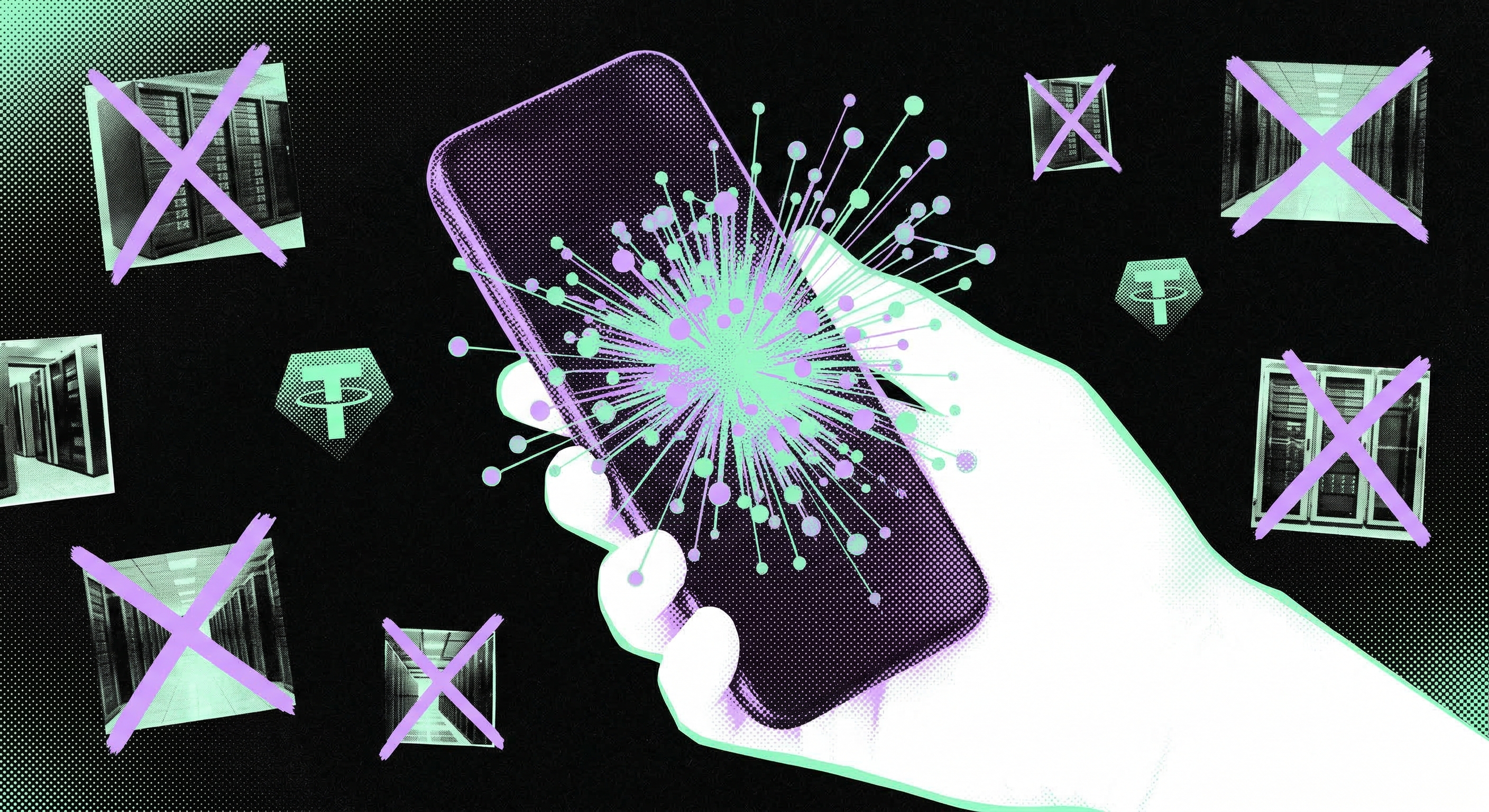
The company behind the world's biggest stablecoin just launched an AI framework that can train language models on a smartphone.
+ Tether's QVAC division built the first framework that can fine-tune Microsoft's BitNet language models on consumer phones and laptops
+ A 1 billion parameter model can be fine-tuned on a Samsung S25 in 78 minutes or an iPhone 16 in 105 minutes. They pushed a 13 billion parameter model on the iPhone 16
+ BitNet shrinks model weights to a single bit (just 1s and 0s), letting models twice as large fit on edge devices compared to standard approaches
+ CEO Paolo Ardoino's stated philosophy: "If you create technology that can only endure with your presence, it isn't good technology. You can't truly say it's decentralized or resilient"
+ Tether has teased a crypto wallet with local AI that never sends your financial data to a server
The reality check: benchmarks use only 300 documents, this is fine-tuning not training from scratch, and nobody outside Tether has verified the 13B claim. But the direction is clear: make AI light enough that your phone is the data center, then plug it into crypto wallets.
This is either the most interesting AI move in crypto or the most ambitious distraction in stablecoin history. If Tether ships a wallet where your on-device AI manages your portfolio, flags risks and executes trades without ever sending your data to a server, that's a genuinely new product category. The question is whether Tether, a company that's spent years dodging transparency concerns about its stablecoin reserves, is the right company to ask people to trust with on-device AI. The tech looks real. The trust has to be earned.
This is either the most interesting AI move in crypto or the most ambitious distraction in stablecoin history. If Tether ships a wallet where your on-device AI manages your portfolio, flags risks and executes trades without ever sending your data to a server, that's a genuinely new product category. The question is whether Tether, a company that's spent years dodging transparency concerns about its stablecoin reserves, is the right company to ask people to trust with on-device AI. The tech looks real. The trust has to be earned.
LINKS

+ PayPal expands PYUSD stablecoin to 70 countries with over $4 billion now in circulation
+ Bitrefill reveals March 1 hot-wallet hack with suspected North Korean Lazarus Group ties, says it absorbed the loss
+ World and Coinbase launch AgentKit so AI agents can cryptographically prove a real human is behind them
+ Immutable launches its largest referral rewards pool for its web3 gaming platform, paying out in IMX tokens
+ SEC Chair Atkins proposes a "startup exemption" letting crypto projects raise funds while temporarily exempt from registration
+ Coinbase was also bidding on BVNK before Mastercard won the deal at $1.8 billion

+ Algorand Foundation: Community Manager, Remote
+ Manta Network: Community Manager, Remote (Thailand)
+ Flipster: Growth Marketing Manager, Remote
+ Marex Group: Global Crypto Operations Specialist, London

+ Immutable Play: Create a free Passport, refer friends, earn IMX tokens and prize spins. Zero cost, low risk
+ Backpack Exchange: Trade before March 23 TGE. 240 million tokens go to points holders. Requires KYC and trading, medium risk
+ Human Passport: Sign the Covenant at manifest.human.tech for 1,000 HUMN points toward future token. Free, low risk
+ Bulk Trade: Trade on Solana testnet with no real capital. $8M seed from top VCs, token unconfirmed. Medium-high risk
That's all for today. If this issue helped you navigate the noise, forward it to someone who's still lost in it.
Written by the Navigating Web3 crew.
Got a tip, a correction, or a hot take? Reply directly. We read every one.
That's all for today's Navigating Web3. See you tomorrow.
This newsletter is for informational and educational purposes only and is not financial advice. Do your own research before making any investment decisions.