Welcome back. The theme today is walls coming down. The U.S. government is handing crypto companies the same bank charters that Wells Fargo and JPMorgan hold. Stripe launched a blockchain where AI bots can spend money without asking a human first. And Morgan Stanley decided it's done selling BlackRock's Bitcoin fund and wants its own. A year ago, crypto was fighting for legitimacy. Today it's fighting over who controls the infrastructure. The old guard isn't blocking crypto anymore. They're racing to own it.
IN TODAY'S NEWSLETTER
1. Washington is turning crypto into a bank
2. Stripe built a blockchain where machines pay machines
3. Morgan Stanley wants its own Bitcoin ETF
REGULATION
Washington is turning crypto into a bank
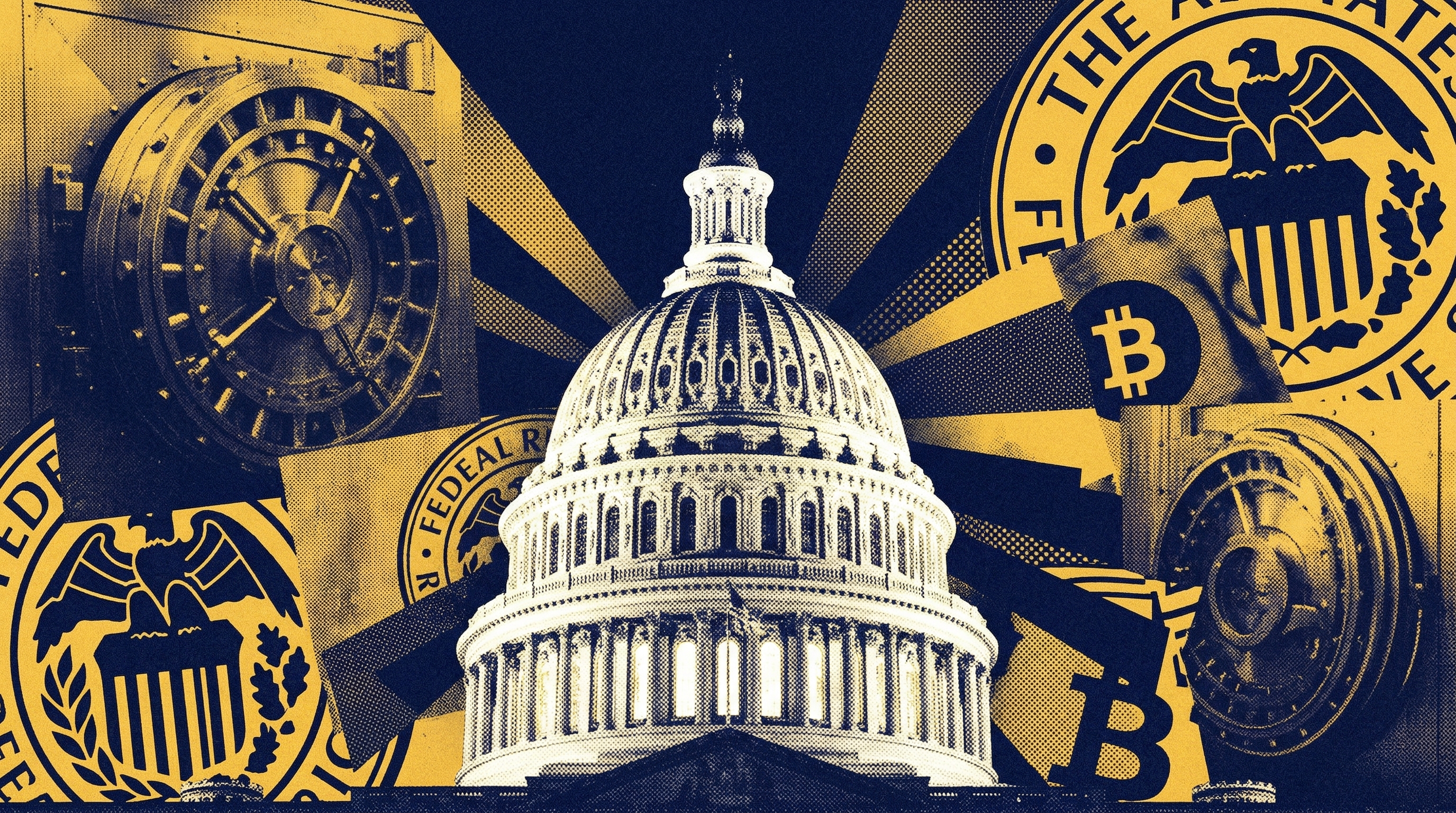
Three months ago, crypto exchanges couldn't get a banker to return their calls. Now the government is handing them bank charters.
+ Comptroller of the Currency Jonathan Gould is actively inviting crypto firms like Ripple and Crypto.com to apply for national bank charters, reversing Biden-era "Chokepoint 2.0" restrictions
+ On December 12, 2025, the OCC conditionally approved five crypto firms at once: Ripple, Circle, BitGo, Fidelity Digital Assets and Paxos. Crypto.com got its approval in February
+ These are national trust bank charters, meaning custody and settlement under federal oversight, with potential access to Fed payment rails like Fedwire and FedNow
+ Gould told bankers there is "simply no justification for considering digital assets differently" from other custody assets
+ Traditional banks warn this creates "a significant loophole" by giving crypto firms Fed access without full banking obligations
Combined with yesterday's SEC taxonomy classifying most tokens as non-securities, the Trump administration is stuffing crypto into existing frameworks rather than building new ones. For regular people, that means your exchange could eventually run on the same plumbing as your bank.
This is the most aggressive pro-crypto regulatory push in U.S. history, and it's happening across multiple agencies at once. The bull case is obvious: real rules, real access, real infrastructure. The bear case is that trust charters without full banking obligations create a new class of lightly regulated institutions with access to public payment systems. If a crypto trust bank fails during a market crash, the "we supervised them" argument gets tested fast. The direction is set. The question is whether the guardrails are strong enough for the speed.

This is the most aggressive pro-crypto regulatory push in U.S. history, and it's happening across multiple agencies at once. The bull case is obvious: real rules, real access, real infrastructure. The bear case is that trust charters without full banking obligations create a new class of lightly regulated institutions with access to public payment systems. If a crypto trust bank fails during a market crash, the "we supervised them" argument gets tested fast. The direction is set. The question is whether the guardrails are strong enough for the speed.
AI X CRYPTO
Stripe built a blockchain where machines pay machines

Stripe just launched a blockchain. Not a side project. A full Layer 1 chain designed to let AI agents spend money.
+ Tempo went live March 18 alongside the Machine Payments Protocol (MPP), an open standard that lets AI agents pay for services autonomously using stablecoins
+ Tempo was incubated by Stripe and Paradigm, and raised $500 million at a $5 billion valuation in 2025 from investors including Thrive Capital
+ The chain has no native gas token. You pay fees in stablecoins, targeting sub-second finality and tens of thousands of transactions per second
+ Launch partners include Visa, Lightspark and Stripe itself, with a directory of MPP-compatible services from OpenAI, Anthropic and Google already live
+ Critics question whether the world needs another L1 when Solana and Base already handle fast, cheap payments
Think of MPP like what Stripe did for online payments in 2011: one integration, every payment method. Except this time the customer is a bot.
MPP is the most interesting thing here, not the chain itself. If AI agents are going to handle real money, they need a billing standard that works everywhere, not a different checkout flow for every service. Whether Tempo the blockchain survives long-term matters less than whether MPP the standard gets adopted. If Visa, Stripe and Lightspark are already on board, it might not matter which chain it runs on.
MPP is the most interesting thing here, not the chain itself. If AI agents are going to handle real money, they need a billing standard that works everywhere, not a different checkout flow for every service. Whether Tempo the blockchain survives long-term matters less than whether MPP the standard gets adopted. If Visa, Stripe and Lightspark are already on board, it might not matter which chain it runs on.
MARKETS
Morgan Stanley wants its own Bitcoin ETF
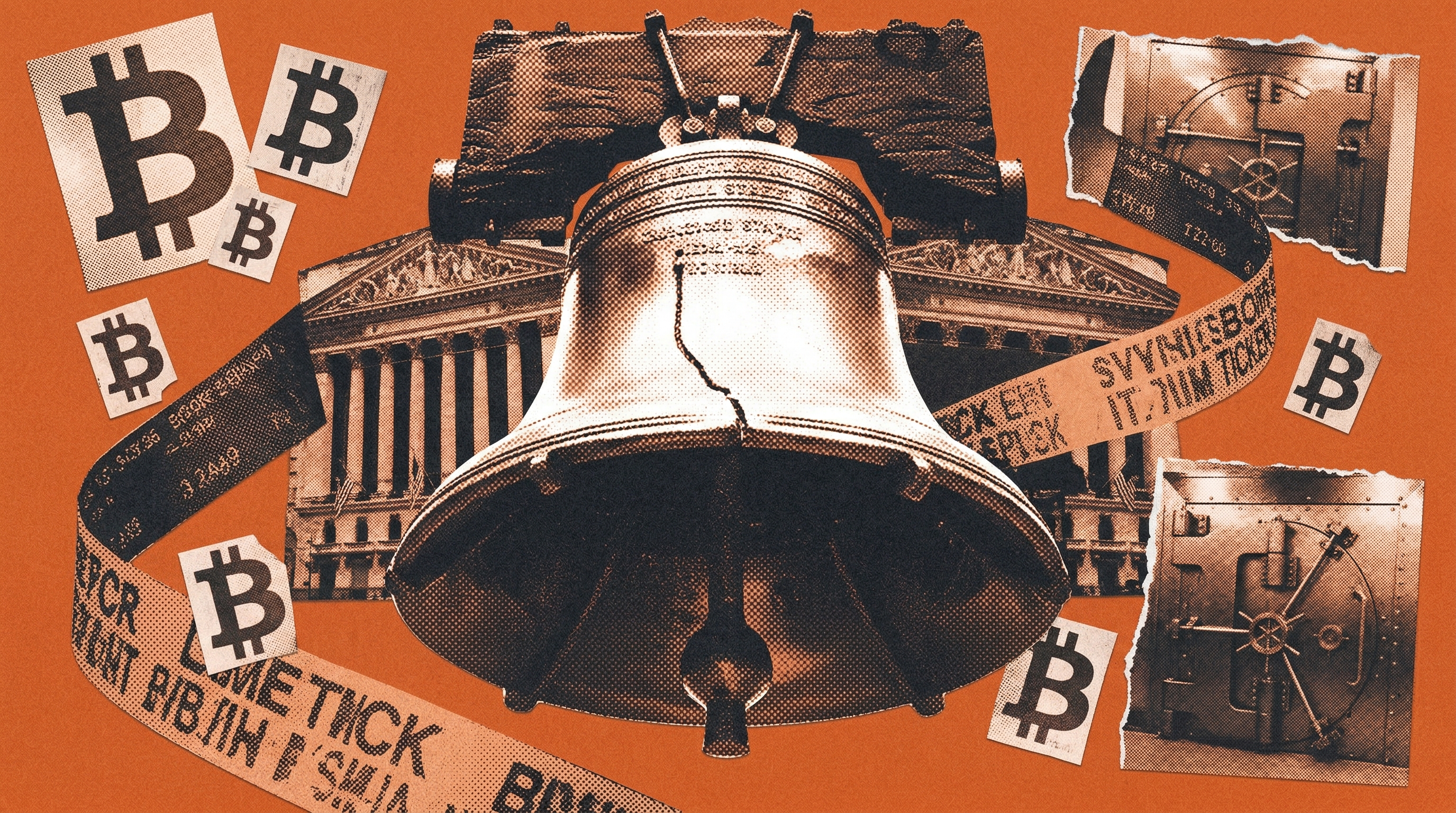
Morgan Stanley is done selling other people's Bitcoin funds. It wants its own.
+ The bank filed a second amended S-1 on March 18 for the Morgan Stanley Bitcoin Trust, ticker MSBT, to trade on NYSE Arca
+ Coinbase Custody and BNY Mellon are joint custodians. The fund holds actual Bitcoin in cold storage, no derivatives
+ The Trust disclosed a $1 million seed from 50,000 shares at $20 each, and will offer a fee waiver on the first $5 billion for six months
+ If approved, it would be the first spot Bitcoin ETF by a major U.S. bank, shifting Morgan Stanley from distributor to issuer
+ U.S. spot Bitcoin ETFs hold over $75 billion combined. BlackRock's IBIT alone tops $30 billion. Morgan Stanley manages roughly $6.5 to $7 trillion firm-wide
+ The bank is also pursuing Ethereum and Solana ETFs, with the Solana product including a staking component
The moment a bank of this size decides to issue its own Bitcoin ETF instead of just distributing someone else's, Bitcoin's status as a mainstream asset class is basically settled. The interesting fight now is over economics. BlackRock built a $30 billion Bitcoin business. Morgan Stanley wants a piece of it. JPMorgan, Bank of America and Citi are watching. Expect more bank-branded Bitcoin funds by year end, and expect fees to keep falling. For anyone holding Bitcoin through an ETF, that's good news. Competition makes your investment cheaper.
The moment a bank of this size decides to issue its own Bitcoin ETF instead of just distributing someone else's, Bitcoin's status as a mainstream asset class is basically settled. The interesting fight now is over economics. BlackRock built a $30 billion Bitcoin business. Morgan Stanley wants a piece of it. JPMorgan, Bank of America and Citi are watching. Expect more bank-branded Bitcoin funds by year end, and expect fees to keep falling. For anyone holding Bitcoin through an ETF, that's good news. Competition makes your investment cheaper.
LINKS

+ Crypto.com cuts 12% of staff, blaming AI automation for replacing roles
+ World Liberty Financial hosted 500 Wall Street execs and regulators at Mar-a-Lago, crypto's power dinner
+ The White House crypto czar calls the new Strategic Bitcoin Reserve a "digital Fort Knox" that the government will never sell
+ Nvidia's GTC keynote on agentic AI sparked a rally in AI-linked tokens like TAO, FET and NEAR
+ VCs say the AI boom is siphoning venture money away from crypto startups, even as crypto raises $2.5 billion in 2026
+ AI-crypto projects like Bittensor, NEAR and Render gain renewed investor interest as models and GPUs become on-chain assets

+ Horizen Labs: Community Manager, ZKVerify (Remote)
+ Bitpanda: Specialist Customer Care Community (Remote)
+ Bitfinex: Content Marketing Manager (Remote)
+ Blockchain.com: Growth & Community Lead (Ghana, hybrid)

+ Kled AI: Upload photos from your iPhone to train AI models, earn KLED tokens. iOS only, zero cost, medium risk
+ Grass Stage 2: Install browser extension, share unused bandwidth, earn points toward token drop. Zero cost, snapshot not yet announced
+ Arc Network: Use Circle's testnet L1, do basic on-chain activity with test tokens. Zero cost, airdrop unconfirmed but Circle-backed
+ Airdrops.io picks: Browse curated low-capital browser extensions and Telegram mini-apps with active point programs. Filter for no-deposit tasks, varies by project
That's all for today. If this issue helped you navigate the noise, forward it to someone who's still lost in it.
Written by the Navigating Web3 crew.
Got a tip, a correction, or a hot take? Reply directly. We read every one.
That's all for today's Navigating Web3. See you tomorrow.
This newsletter is for informational and educational purposes only and is not financial advice. Do your own research before making any investment decisions.